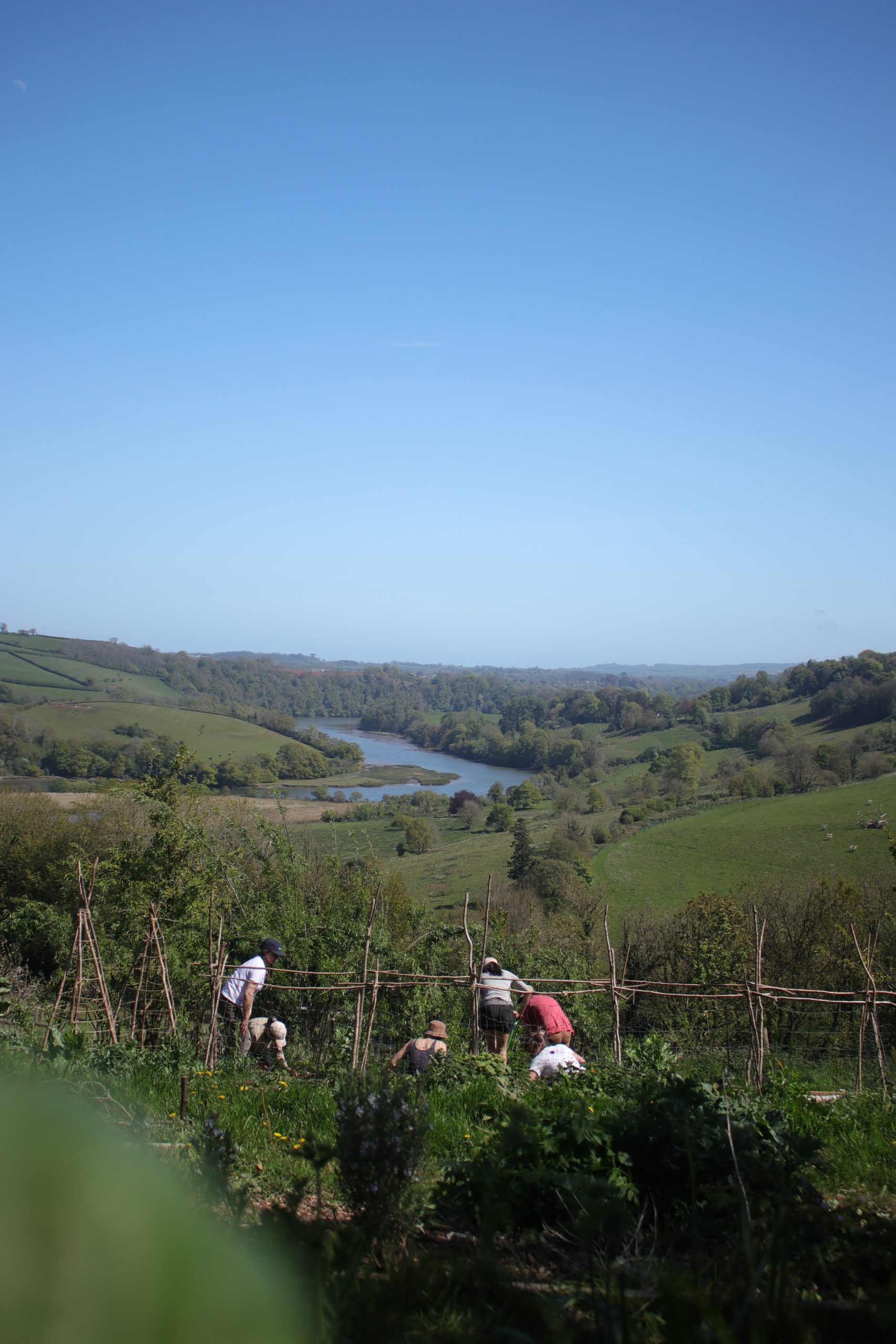
Overlooking the River Dart, our one-acre organic garden is a collaborative place to grow food, connect and learn with others and observe wildlife. By providing an educational space for trainees, volunteers and United Response service users, we demonstrate wildlife-friendly gardening, growing nourishing food for garden users, and sharing knowledge and practical skills. The garden also provides a mindful space to relax and a wonderful vantage point over the rest of the farm where you can watch the cows grazing, birds flying, and the land transforming as we implement nature recovery techniques.
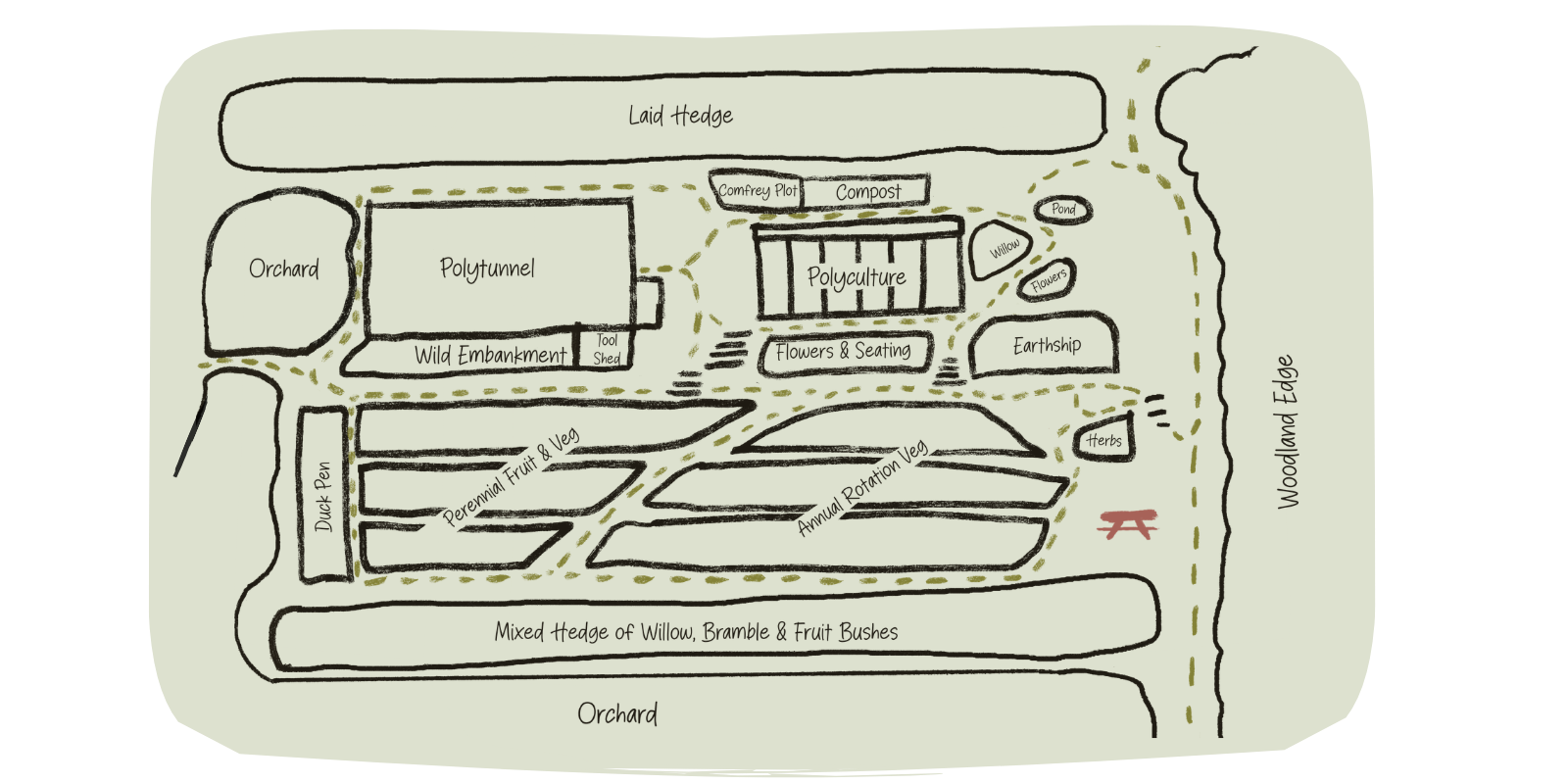
The garden features a polytunnel, the Earthship (a shelter made with repurposed materials with a living roof that collects rainwater), raised beds for growing fruit, vegetables and herbs, a compost system and heritage apple and pear trees. Wildlife thrives in the garden thanks to the dynamic habitats of hedges and trees and the neighbouring orchard, woodland and fields. Finches, tits, thrushes, stonechats, birds of prey and many other birds nest and visit the garden. The wild edges support many creatures who help to co-create this intricate ecosystem.
The garden is a place of reflection, mindfulness and connection to other people and nature. This space champions inclusivity and enriches the lives of everyone who visits, helping us to foster an environment where everyone can learn, grow, and thrive.
We aim to create a vibrant, biodiverse garden that supports wildlife, provides food, and fosters a space for a bunch of different individuals and communities.
Growing food that works in collaboration with nature is key. Adding organic matter to the soil, not using chemicals and pesticides, and making space for local wildlife creates more resilience within the food system
The garden strives to be an accessible safe space for all to enjoy, and recent changes and additions have made it more accessible to people differently abled.
We aim to present a beautiful space within the gorgeous Dart valley, which encourages people to spend time there.
We want to support garden visitors to develop meaningful relationships and awareness of the relationships between ourselves, the food we consume, and natural systems. Growing food creates space for us to ask: where does our food come from? How is it grown or sourced? What is the cultural significance of particular foods? What are the environmental impacts of certain foods? What emotional connection do we have to some foods? How can the food system support everyone?
With the help of our trainees, garden volunteers and the United Response garden crews, we have grown and taste tested these wonderful dried peas. We love them cooked in a traditional way with some salt and vinegar. They make delicious hummus too! We look forward to growing and eating more Carlin Peas and hope to see their popularity grow too – spread the word 🙂
We’ll soon be retting our flax, which has been hung up to dry since getting harvested by our wonderful staff and volunteers. It is a real treat to accompany the process of this material, from growing it to final product.
It is important that our garden not only produces us food, but also creates space and food for wildlife.
This year was the first time that we’d planted watermelon, and it was such a rewarding experience (and a tasty one!)
By entering your email you consent to receive emails & updates from us.