Kate Dewally, a PhD student at the University of East Anglia researching English environmental payment schemes (ELMS, private nature markets) for farmers and farm cluster groups, recently talked to Jack about our Rewilding project on the Sharpham Estate. In her words, read the resulting blog article below!
It was brilliant to chat to Jack Skuse, a director at Ambios and tenant farmer on the Sharpham Estate, where himself along with Ambios, the Sharpham Estate and United Response run a people-centred rewilding project. So far, the project has not only achieved gains in biodiversity, but has admirable social outcomes, through providing access to nature and educational opportunities. Read on for a short outline of what the project has been up to and how it is making a real difference in its local community.
How it all started…
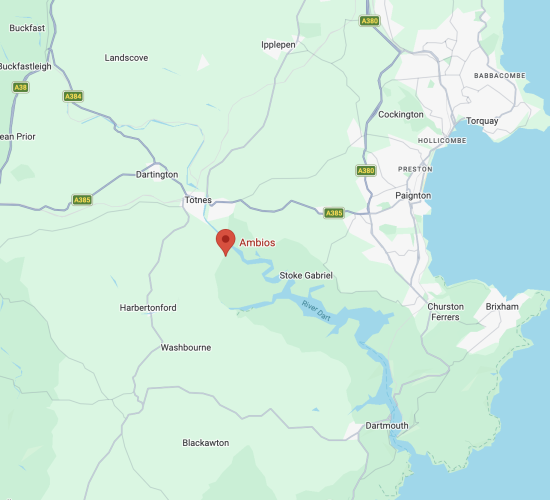
For the last 10 years, Jack has been a tenant of the Sharpham Estate and has been running the 80-acre holding as an organic mixed farm. The farming business relies upon multiple income streams and diversifications, including running an educational farm and accessing higher level stewardship to protect biodiversity including Horseshoe bats and Cirl Buntings. Although this farming approach doesn’t result in the deterioration of nature on the farm, it has not caused significant biodiversity increases.
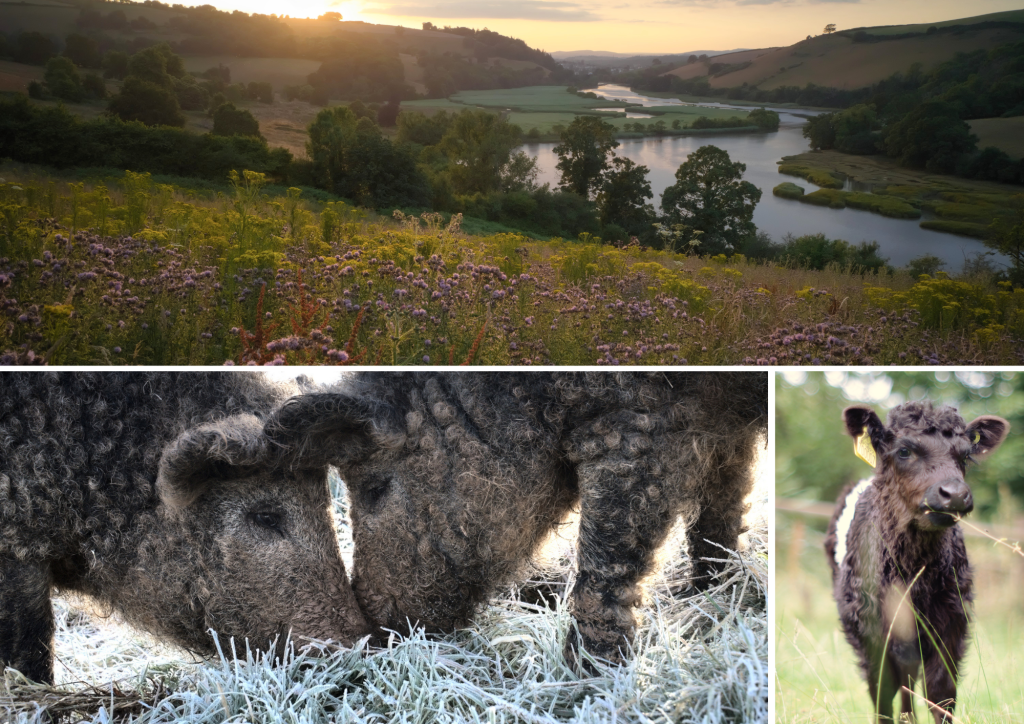
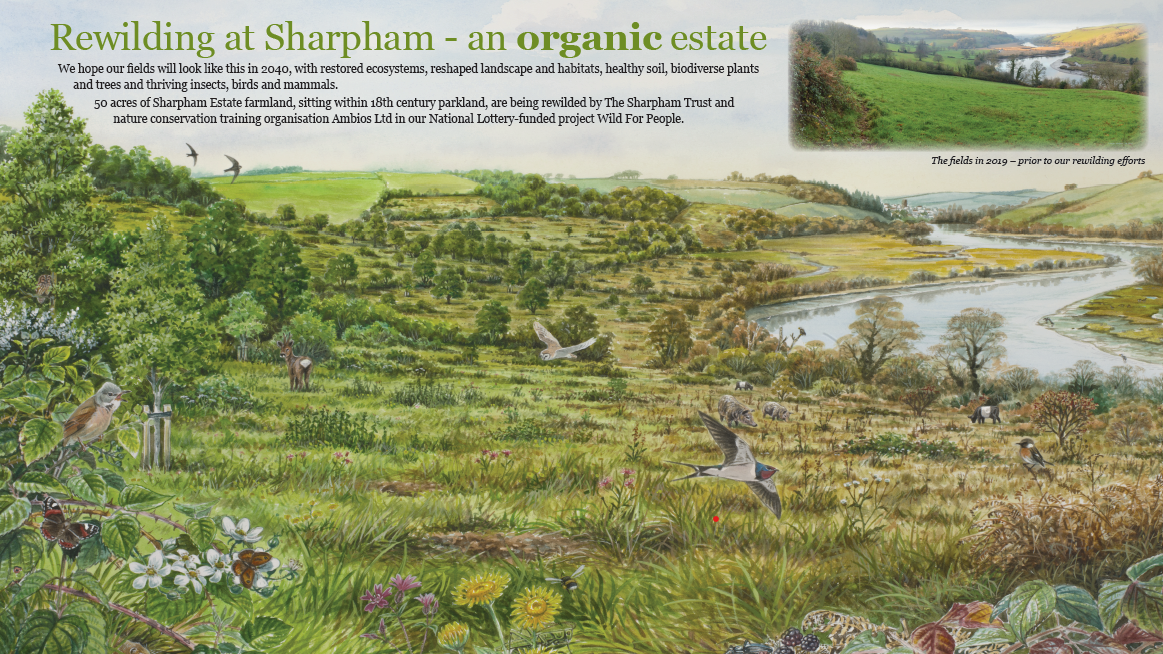
Jack and the team then pitched the idea of taking on the available 50 acres as a rewilding project. The pitch had people and education at the heart of it and the idea was that the project would function as an organic rewilding project which would use natural processes to govern its outcomes. They did plan to use some interventions such as grazing and rootling animals, but overall, the role was to monitor change and intervene as little as possible. To fund the project, Jack approached the National Lottery for funding which since has allowed him to improve access to the site, remove internal fencing and replant trees in their original locations.
“It’s a fundamental change in land use really. And its been a real success, I’d say”
Community is at the core of the project…
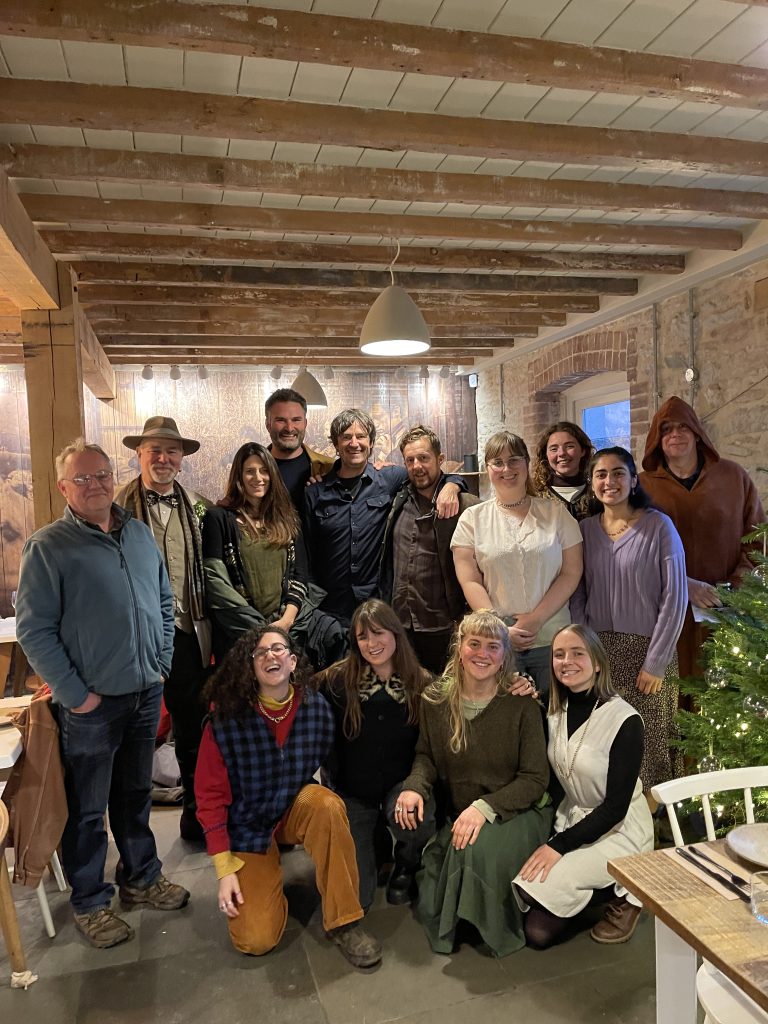
“ We’re very much community at the core, really, and that being involved, practically involved in the day-to-day work and the farm, learning about it, developing their own skills, and also improving their own well-being to better connect”
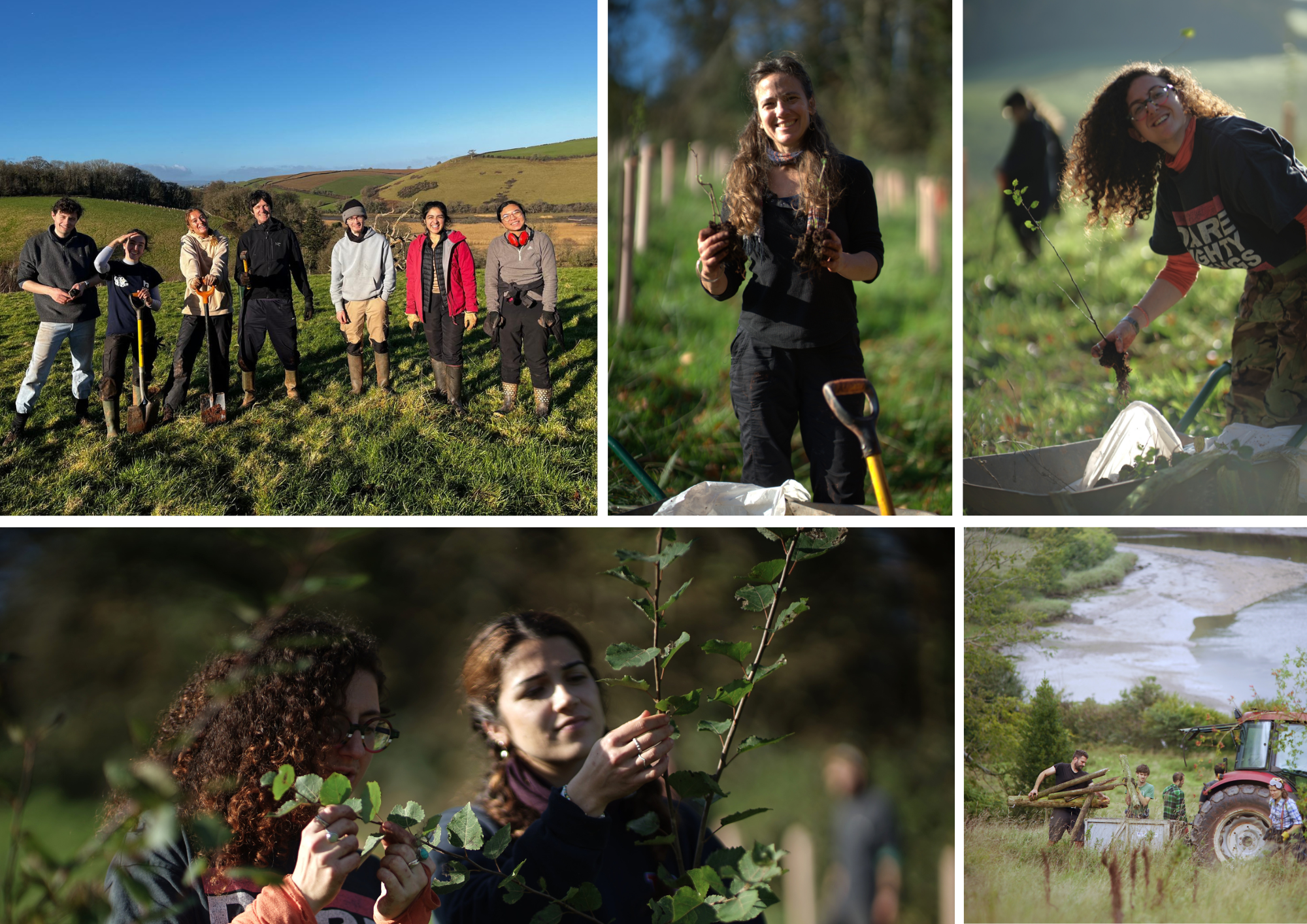
The partners have made the project what it is today and have been instrumental in its success. There are three main partners in the project; Ambios, Sharpham Trust, and United Response. Ambios is an educational, not-for-profit organisation, really encouraging and supporting people who are looking for a career in nature to provide skills, orientation, competence, confidence to start their careers and they offer residential traineeships to learn hands-on skills such as Nature ID, habitat assessments, handling livestock (https://www.ambios.net/). These students are not only developing skills, but also confidence to apply for jobs, and are getting interviews for jobs in conservation – which is not easy!
Overcoming challenges!
To get the project off the ground, they also had to work alongside numerous different stakeholder groups such as Historic England, Natural England and the South Devon National Landscape all with different perspectives on how to approach a rewilding project. And as a tenant, Jack also needed to bring along the board of trustees at the Sharpham estate through sharing the inspiration and monitoring that was going along with the project.
However, bringing so many different people along with them has only taken the project from strength to strength. A benefit is that engagement has made it easy to monitor the progress of the project and build an evidence base for species recovery in the area. The project has already seen plant and small mammal numbers increase which in turn attracted predators such as barn owls and kestrels which are now breeding on site. Furthermore, with the nature of the habitats appearing, Cirl Buntings are making a reappearance!
Visions for the future…
“We are not trying to have a strict outcome in mind for the land, we want to allow natural processes to work through, so whatever comes will come”.
The rewilded project is a small (but mighty) plot within a big landscape and subsequently would like to have the potential to connect up the wider surrounding landscape. So, Jack and his colleagues are currently trying to see what other brilliant people are doing in the area and using that as inspiration to connect. So far, they have formed a catchment partnership, the River Dart Catchment Partnership, which connects the work on the moors, high moors, down to the coastal work at Dartmouth and beyond (https://riverdart.org/). It brings together the landowners in the areas, facilitating a forum and providing development for an action plan.
“And so, you know, we need to do things that are joined up and radical and not just on the small scale working in our sort of narrow project mindset, but to be much more joined up. So to create an ecosystem, joined up ecosystem, both as a land-based ecosystem and all the sort of functions that our ecosystem provides, but also organizationally and a human ecosystem where we’re all like aware and not competing with one another.”
With thanks to the project partners