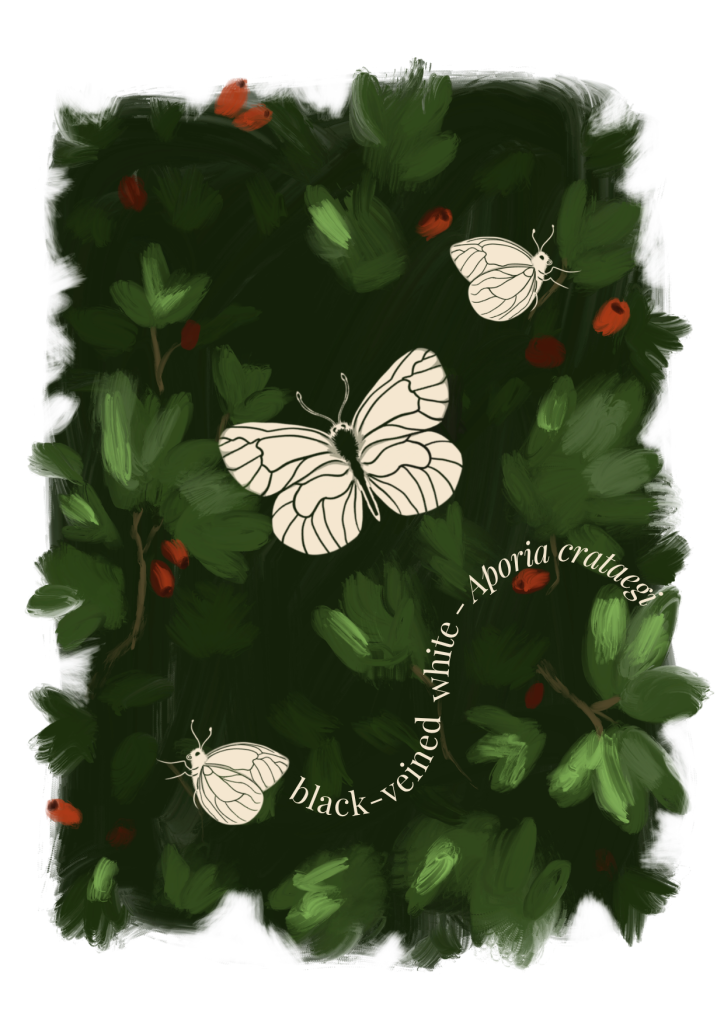
The Black-veined white (Aporia crataegi) (henceforth referred to as BVW), is a native UK butterfly once widespread across southern England and South Wales. Recorded throughout the 18th and 19th centuries, it was considered largely extinct by the 1880s, persisting only in parts of Kent before disappearing entirely in the 1920s. Its decline is thought to have been driven by climatic factors, particularly successive cold and wet summer and autumn periods during the nineteenth century.
The species’ range margins are now shifting, with a northern expansion in Finland and Denmark and an upward altitudinal shift in southern mainland Europe, likely reflecting responses to climate and/or habitat change. Bioclimatic models indicate that a projected drying climate in south-eastern Britain will create highly suitable conditions for this species until at least 2050, suggesting that this is an opportune time for reintroduction in southern England.
This collaborative project with Knepp Wildland Foundation involves a lot of people and organisations. Ambios has been working with Royal Holloway, University of London, DartmoorZoo, Devon Wildlife Trust and a network in France. While Knepp Wildland Foundation is working with Zoological Society of London and the University of York, Butterfly Conservation and organisations in Spain. Collectively, we’re a big group! These associations continue to expand as the project progresses. We join with one common aim – to see this charismatic art-deco butterfly return to the countryside and villages of southern England – another example of nature recovery in action.
In 2025, female adults were translocated from Normandy, France, to Devon and are now being reared in captive breeding cages, in preparation for release. In March 2026 Natural England granted the necessary 5-year license for release (2024-69379-SCI-SCI).
The Black-veined white is an iconic and visually striking butterfly, and its reintroduction would provide a flagship species for nature recovery and rewilding initiatives across the UK. Significantly, creating suitable habitat for this butterfly would also benefit pollinating insects and other wildlife, many of which are under pressure from climate change. With relatively few butterflies remaining in the UK, the return of one of Europe’s most spectacular species will be a boost for ailing ecosystems as well as butterfly enthusiasts, and will help more people connect with nature and the wider countryside.
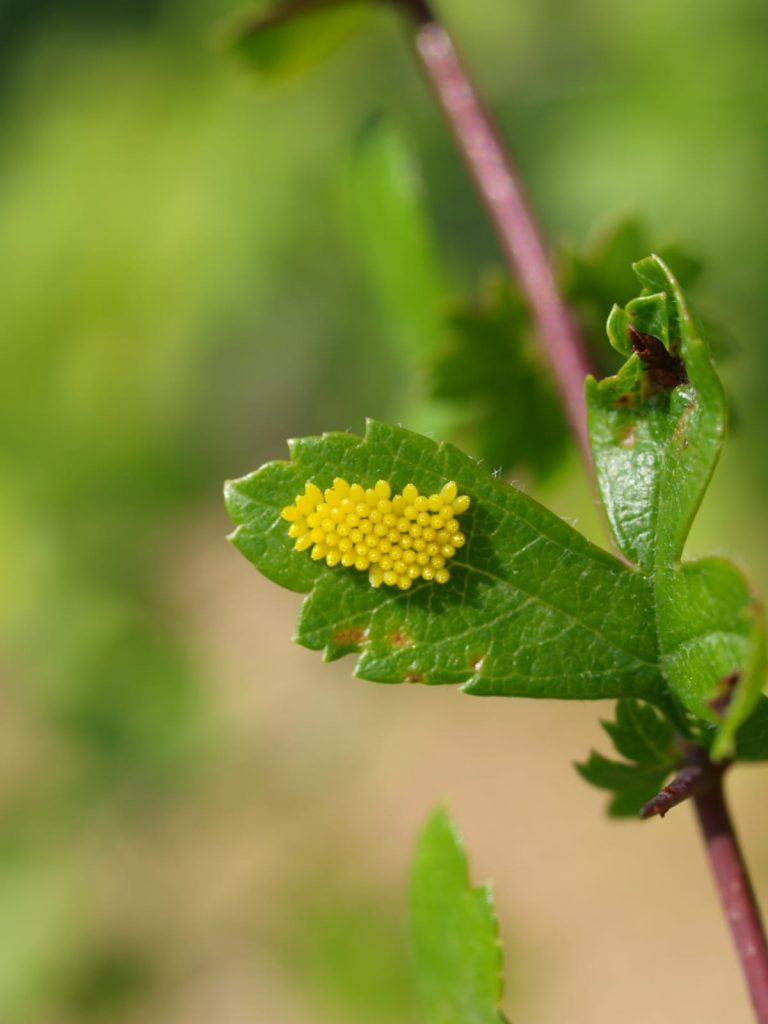
The reintroduction will also be used to encourage greater planting of hawthorn, the host plant on which the Black-veined white lays its eggs and whose leaves the caterpillars feed on. Hawthorn is a structurally important native hedgerow species in the UK, providing nectar, pollen, berries, larval food, and nesting shelter for a wide range of species, supporting high levels of biodiversity. Although hawthorn itself is not currently considered threatened, the wildlife it supports is affected by broader pressures such as habitat loss, agricultural intensification, pesticide use, and climate change.
By entering your email you consent to receive emails &
updates from us.